-
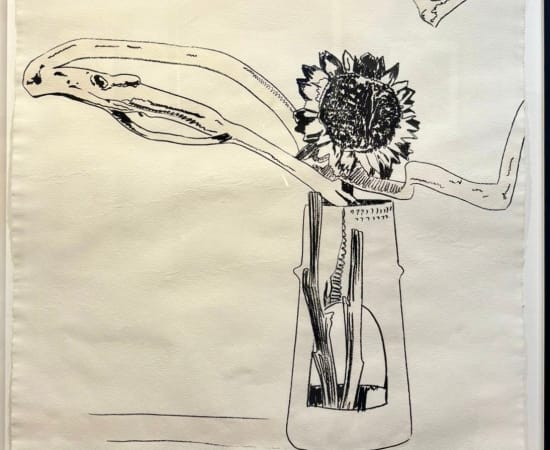
 Andy WarholFlowers (Black & White) , 1974Screen Print124.5 x 90.2 cmEdition of 100

Andy Warhol (1928–1987)
Pioneer of Pop Art & Architect of Modern Visual Culture
Andy Warhol was one of the most influential and recognisable artists of the 20th century. Born in Pittsburgh in 1928, Warhol began his career as a successful commercial illustrator before emerging as the leading figure of the Pop Art movement, redefining the boundaries between fine art, consumer culture, celebrity, and mass production.
Warhol’s work distilled the visual language of post-war America — its products, its icons, and its obsessions — into a new artistic vocabulary. His most celebrated series, including Marilyn Monroe, Campbell’s Soup Cans, Flowers, and Dollar Bills, transformed everyday imagery into powerful symbols of modern life. Through silkscreen printing, repetition, and industrial colour, Warhol removed the artist’s hand from the canvas, emphasising the role of media, branding, and desire in contemporary culture.
In the 1960s, Warhol established The Factory in New York City — a legendary studio that became a hub for artists, musicians, writers, models, and cultural outsiders. It was here that Warhol produced not only paintings and prints, but also films, sculpture, photography, and multimedia works, expanding the definition of what an artist could be.
Throughout his career, Warhol explored themes of fame, consumerism, mortality, and the collapse of high and low culture. His portraits of figures ranging from Elizabeth Taylor and Muhammad Ali to anonymous partygoers and socialites captured the shifting face of American identity. His later works, including the monumental Reversals and Retrospectives, revisited earlier motifs with new psychological depth.
Warhol’s influence extends far beyond art history. He anticipated the age of celebrity culture, social media, and image saturation, famously declaring: “In the future, everyone will be world-famous for 15 minutes.” His legacy continues to shape contemporary art, fashion, film, and visual communication.
Today, Andy Warhol’s works are held in the world’s most prestigious collections, including the Museum of Modern Art, Tate Modern, the Whitney Museum, and The Andy Warhol Museum. He remains a defining figure in the evolution of modern and contemporary art — a visionary who reshaped the way we look at images, culture, and ourselves.