-
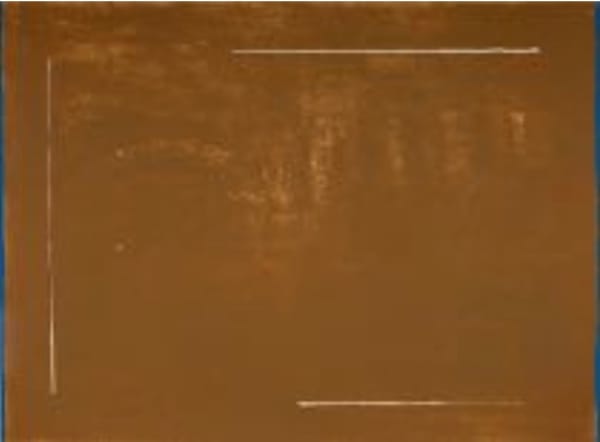
 William ScottBrown Field Defined, 1972Screen Print58 x 78 cmEdition of 72
 -
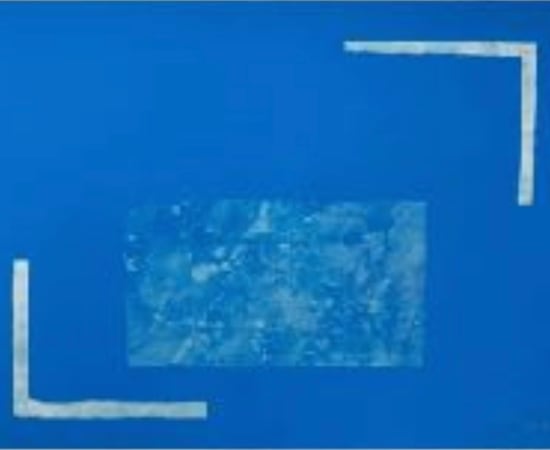
William ScottAngles Equal , 1972Screen Print77x 96cmEdition of 72


William Scott (1913–1989)
Modern British Painter of Abstraction, Still Life & Form
William Scott was one of the most important figures in post-war British art, celebrated for his distinctive approach to still life, abstraction, and the expressive potential of everyday objects. Born in Greenock, Scotland, and raised in Northern Ireland, Scott trained at the Belfast School of Art before enrolling at the Royal Academy Schools in London. His early classical grounding was soon transformed by encounters with European modernism, including the influence of Cézanne, Braque, and the School of Paris.
Scott’s work evolved throughout the 1940s and 1950s into a highly personal language of abstracted form, purity of shape, and a restrained yet resonant colour palette. His tables, bowls, pans, jugs, and eggs — seemingly simple motifs — became vehicles for exploring balance, rhythm, geometry, and the tension between surface and depth. These forms were not mere domestic objects but expressions of intimacy, memory, and the quiet drama of stillness.
By the mid-1950s, Scott was associated with the flourishing St Ives School, exhibiting alongside major British modernists such as Patrick Heron, Ben Nicholson, and Peter Lanyon. His reputation quickly grew internationally: in 1958 he represented Great Britain at the Venice Biennale, cementing his position as a leading figure in modern abstraction. His later years saw a return to more gestural compositions and a renewed interest in colour, while maintaining the clarity and structure that defined his style.
William Scott’s work is held in major collections worldwide, including the Tate, the Museum of Modern Art, the Hirshhorn Museum, the National Gallery of Ireland, and numerous prestigious private collections. His paintings, prints, and drawings continue to be celebrated for their refinement, balance, and ability to transform the ordinary into the poetic.
Scott remains a cornerstone of 20th-century British art — an artist who found profound harmony in the simplest of forms and whose work continues to inspire new generations of painters.